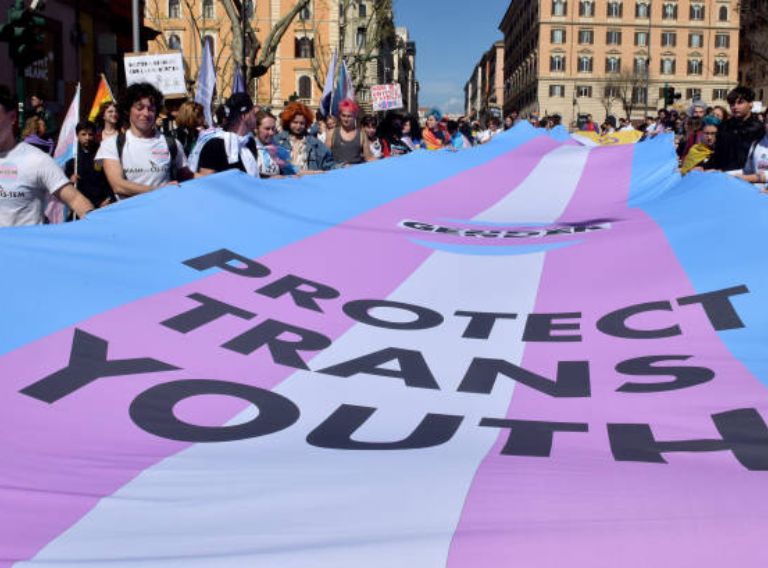
In my work as the Executive Director of Youthwell New Hampshire, an organization dedicated to addressing youth mental health, I have seen firsthand how policy decisions made by our state legislators can shape the mental health and well-being of young people across our state.
That’s what makes a slate of legislation currently moving through the NH State House, so concerning.
HB 1217, HB 1299, HB 1442, HB 1447, and SB 552, with minor differences, all aim to restrict access to facilities throughout the state for transgender and nonbinary Granite Staters. While these bills are framed around definitions and classifications, their real-world impact is much more significant. They would eliminate accepting environments, redefine identity in ways that exclude people, and create legal carve-outs that weaken longstanding nondiscrimination protections. For LGBTQ+ youth, these aren’t abstract policy debates, they are signals about whether their state sees them as full members of the community.
And young people are paying attention.
New Hampshire’s youth are already navigating a mental health crisis. We know that LGBTQ+ young people, in particular, experience higher rates of anxiety, depression, and feelings of isolation. But we also know something equally important: when they feel supported by their schools, their communities, and their leaders, their outcomes improve dramatically. For all people, a sense of belonging is one of the strongest protective factors we can offer.
Legislation that singles them out and impacts their experiences within their communities does the opposite. It increases stigma, deepens isolation, and makes it harder for them to access the very environments that help them thrive.
New Hampshire has long valued both individual freedom and community responsibility. Those values are not at odds. Ensuring that every young person is free to safely participate in school, use public spaces, and exist without fear of exclusion is a direct reflection of those two core principles.
When we pass laws that limit who belongs, we move away from that tradition.
Governor Kelly Ayotte will soon have the opportunity to decide whether these bills become law, a decision she has faced two times before and chosen to veto similar legislation. Today, another veto would not only be good policymaking but also serve as a meaningful statement that New Hampshire remains committed to the dignity, safety, and well-being of all its residents.
New Hampshire’s young people deserve to know their state stands behind them.
Tricia Brannen is the Executive Director of YouthWell New Hampshire. She lives in Goffstown.